What exactly are CE, RoHS, FCC, TELEC and PSE?
Each certification addresses different types of risks.
1. CE: The compliance mark for products entering the EU market
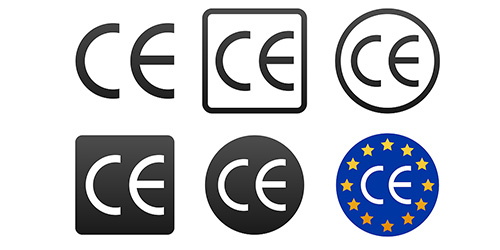
CE is essentially the conformity mark for the European Union market. It indicates that the product has undergone conformity assessment in accordance with relevant EU directives and meets the essential requirements for safety, health and environmental protection, allowing free circulation within the European Economic Area.
The official EU definition of CE: A product has been assessed to meet the EU’s high-level safety, health and environmental protection requirements.
Whether a product requires CE marking is not decided by sellers, but depends on whether it falls within the scope of EU directives covered by CE.
The EU also clarifies officially that CE marking applies only to products covered by specific EU directives. If a product is subject to multiple EU requirements, all must be satisfied before the CE mark can be affixed.
For electronic products, CE commonly covers several sub-directives: RED, EMC, LVD and RoHS.
Important note: RoHS is not part of RED / EMC / LVD. However, for many electrical and electronic products, RoHS is one of the applicable directives that must be included in the EU Declaration of Conformity and CE compliance system.
In practice, RoHS reports are usually issued separately, though RoHS directives may be listed within the CE DoC.
2. RED: Core requirement for products with wireless functions
RED stands for Radio Equipment Directive 2014/53/EU.
It governs products with wireless transmission capabilities. Examples: Bluetooth earbuds, WiFi cameras, motorcycle intercoms, wireless microphones, wireless remote controls, WiFi-enabled projectors, Bluetooth voice recorders — nearly any device transmitting wireless signals is likely subject to RED.
RED focuses on three key areas:
- Safety and health protection
- Electromagnetic compatibility
- Efficient use of radio spectrum, preventing unauthorized frequency occupation, excessive transmission and interference with other equipment.
EU official statement for RED: It establishes a regulatory framework for placing radio equipment on the market, covering safety & health, electromagnetic compatibility and efficient use of radio spectrum.
This is why platform audits for wireless products frequently request: Operating frequency range, maximum RF output power, Bluetooth version, antenna type, and clear statements in user manuals.
These are not formalities; they are core compliance information required by RED.
3. EMC: Do not interfere with others, and resist normal external interference
EMC stands for Electromagnetic Compatibility.
It regulates two aspects: Whether your electronic device interferes with other equipment during operation; and whether the product malfunctions easily under normal external electromagnetic interference.
Devices such as monitors, navigators, cameras, projectors, voice recorders and power adapters may require EMC even without Bluetooth or WiFi.
Typical EMC test items: Radiated emission, conducted emission, electrostatic discharge immunity, RF immunity, surge, electrical fast transient, etc.
In plain terms: Your product cannot act as an electromagnetic noise source that disrupts other devices once powered on; nor can it be overly vulnerable and malfunction when nearby standard electronics operate.
4. LVD: Prevention of electric shock, overheating and fire hazards
LVD stands for Low Voltage Directive.
It governs electrical safety. Key evaluation points: Electric shock protection, insulation, dielectric withstand, temperature rise, fire resistance and structural safety.
LVD applies to electrical equipment with rated voltage of AC 50–1000V or DC 75–1500V, as defined in the official EU text of the Low Voltage Directive.
Low-voltage battery-powered compact devices may not fall under LVD scope. However, products equipped with power adapters, chargers, plugs or power cords must pay close attention to electrical safety requirements.
A simple memory rule for cross-border sellers: RED controls wireless performance; EMC controls electromagnetic interference; LVD controls electrical safety.
5. RoHS: Not a performance certification, but environmental compliance
RoHS stands for Restriction of Hazardous Substances.
It does not evaluate whether a product works well. Instead, it restricts excessive hazardous substances inside electrical and electronic products. Restricted substances include lead, mercury, cadmium, hexavalent chromium, certain flame retardants, phthalates, etc.
EU official statement for RoHS: Restricts the use of hazardous substances in electrical and electronic equipment to protect the environment and public health.
Clarifying the relationship between RoHS and CE: RoHS is not a sub-test under RED, EMC or LVD. Still, for many electrical and electronic products, RoHS is a mandatory directive for EU market access and normally needs to be stated in the EU Declaration of Conformity.
In practical work, you will often see these documents bundled in one compliance package: CE DoC, RED Report, EMC Report, Safety Report, RoHS Report. Each document addresses distinct risks.
Quick summary: CE acts as the overall market access mark; RoHS focuses on material environmental hazard restrictions.
6. FCC: RF and electromagnetic compliance for the US market
FCC refers to the U.S. Federal Communications Commission.
It regulates RF and electromagnetic emission requirements for most electronic and wireless products sold in the United States.
FCC Part 15 is the most commonly encountered regulation for cross-border sellers. FCC Part 15 covers many radio-frequency devices that do not require an individual radio license, including intentional radiators, unintentional radiators and incidental radiators.
As specified in the U.S. eCFR official regulation, Part 15 sets rules for intentional, unintentional and incidental radiators operating without an individual license, plus technical and administrative requirements for marketing Part 15 devices.
Simplified explanation: Products with Bluetooth, WiFi or wireless remote control functions normally require FCC compliance. Even electronics without wireless features but containing digital circuits that generate electromagnetic radiation may fall under FCC scope.
Common FCC documentation items: Frequency range, output power, bandwidth, spurious emissions, radiated emission, conducted emission, FCC ID, labeling requirements, manual statements, etc.
7. ANSI: Not a certification, but test methodology standards
ANSI is often mentioned alongside FCC, e.g. FCC Part 15 + ANSI C63.10.
Important distinction: FCC is the regulatory requirement. ANSI mainly defines test methods and standards.
8. TELEC: Japan’s technical suitability certification for wireless products
TELEC commonly refers to the technical suitability certification under Japan’s Radio Act, widely known as "Gijutsu Tekigo" among sellers. TELEC is one of the major certification bodies in Japan.
TELEC official description: Radio equipment conformity certification verifies that specific radio equipment meets the technical standards defined by Japan’s Radio Act.
It governs whether wireless devices can be legally used in Japan. Applicable products: Bluetooth, WiFi, wireless intercoms, wireless cameras, remote controls and other 2.4GHz / 5GHz devices.
Key TELEC assessment items: Operating frequency, output power, bandwidth, spurious emissions, antenna specifications, modulation type, model consistency and Gijutsu Tekigo registration number.
Critical reminder: CE certification does not grant market access in Japan. FCC certification also cannot replace Japanese wireless compliance. Japan maintains its own radio regulations.
Japanese platform audits frequently require full consistency between certificates, test reports, nameplates, user manuals and product model / frequency / power parameters.
9. PSE: Japan’s electrical safety compliance, NOT wireless certification
Besides TELEC, PSE is another essential Japanese certification.
PSE originates from Japan’s Electrical Appliance and Material Safety Law, administered by METI (Ministry of Economy, Trade and Industry).
METI official statement: This law aims to prevent dangers and obstacles caused by electrical appliances, and regulates manufacturing, importing and sales of electrical products.
Simply put: TELEC manages wireless performance; PSE manages electrical safety.
PSE mainly assesses: Electric shock prevention, fire risk, overheating, insulation, dielectric withstand, structural safety and electromagnetic interference.
PSE is not mandatory for all electronics. Applicability depends on whether the product is listed in the catalog under Japan’s Electrical Appliance and Material Safety Law. METI official documents state that 457 categories of electrical goods are regulated, including 116 categories of specified electrical appliances and 341 categories of non-specified electrical appliances.
PSE has two types:
- Diamond PSE: For high-risk specified electrical appliances, e.g. certain power adapters, plugs and power cords.
- Circle PSE: For non-specified electrical appliances with relatively lower risk, though compliance requirements still apply.
Common pain points for cross-border sellers: Power adapters, chargers, power cords, power banks, lithium battery products, heating appliances and household appliances.
If a product has Bluetooth function and comes with a power adapter, it may need both TELEC and PSE. One for wireless compliance, the other for electrical safety; neither can substitute the other.
